
VZU Sketch .
Wireframes, prototypes, Figma handoff.
Capability
VZU Sketch
12
Engineers
VZU Sketch is the design capability in the VZU family — wireframes, prototypes, figma handoff. Operated by Virtual Zero Unbound Inc. (Vancouver), Plex Dubai (MENA), and Wahix (India). Ships on the NetWit Agentic OS runtime. SOC 2, HIPAA, ISO 27001 posture. Audit trail by default. RBAC at the agent level.

The position
From idea to interface.
VZU Sketch is the wireframe, prototype, and Figma handoff practice. The work is the brief before the brief — the low-fidelity thinking that makes the high-fidelity work possible. We sketch on paper. We sketch in Figma. We sketch in code. The sketch is the conversation between the operator's idea and the engineer's implementation.
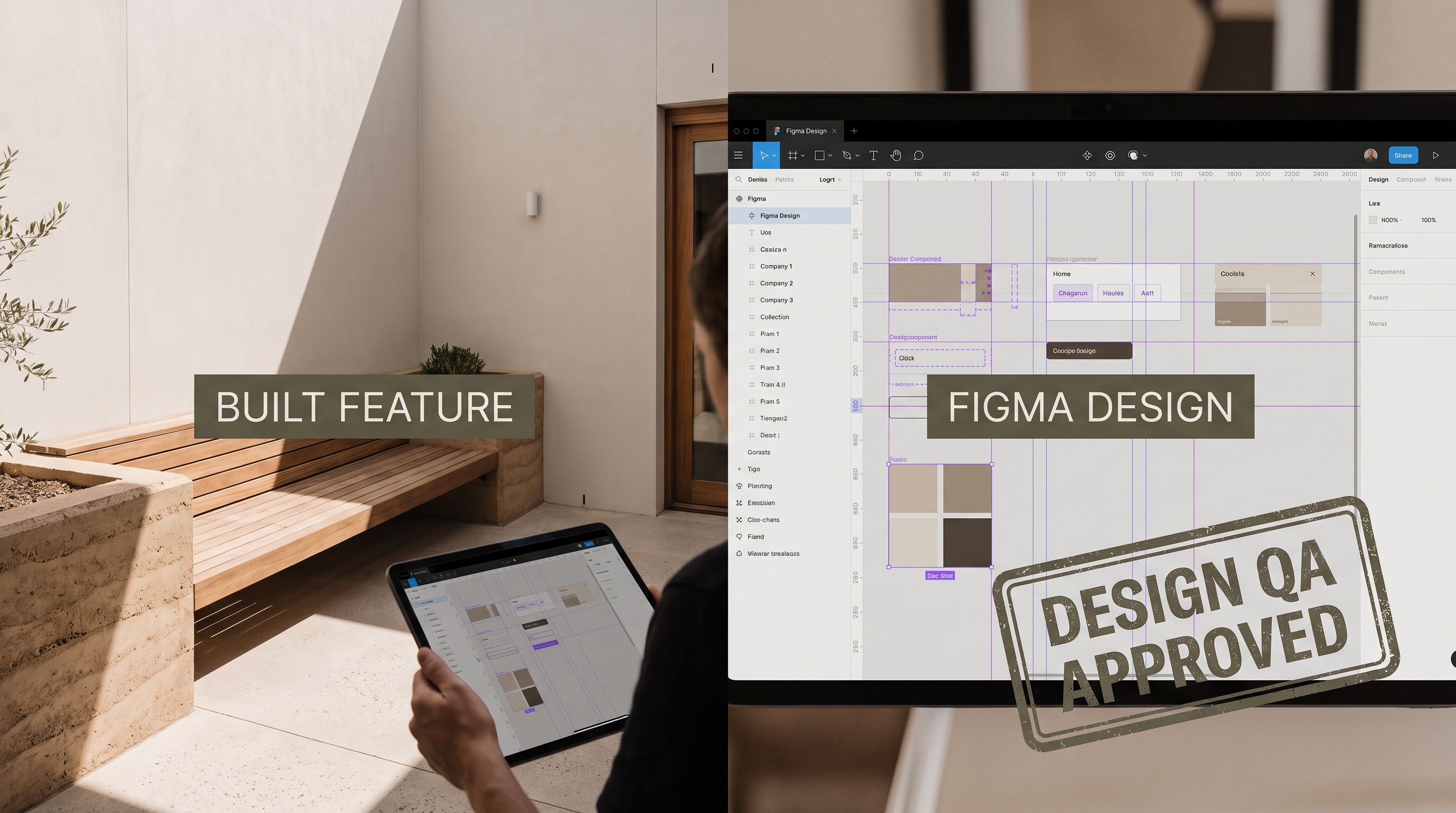
We do low-fidelity wireframes. We do mid-fidelity prototypes. We do high-fidelity Figma files with annotations, auto-layout, variants, tokens, and components. We do clickable prototypes that run on a phone. We do design QA against the built product. The handoff is the same file the operator is looking at, with the right detail at the right time.
VZU Sketch designers are senior. They have shipped the design and the code. They know what the engineer needs, what the operator wants, what the customer actually does. They know when to add detail and when to leave the sketch rough. The sketch is the work. The sketch is the contract. The sketch is what gets built.
The practice, in pictures
Three things we get right, every time.


 Production
 The proof
Voice Agently mobile. Wireframes + clickable prototype.
Mobile app wireframes and a clickable prototype for the Voice Agently mobile app, including a 3-step onboarding flow, the live-call monitor, the call log detail view, and the billing screen. Built by VZU Sketch in 4 weeks.
- → 3-step onboarding flow with state machine annotations
- → Live-call monitor with WebSocket connection states
- → Call log detail view with audio playback + transcript
- → Billing screen with usage metering and proration
-
4
Weeks to ship
-
12
Screens
-
3
User flows
-
1
Clickable prototype
The engagement
How we work, end to end.

- Tool
-
Figma + paper
Figma for the file. Paper for the first pass. The medium is the message.
- Libraries
-
Reusable components
Type, color, motion, spacing — all in tokens. Variants for every state.
- Prototyping
-
Clickable, runnable
Figma prototype on a real phone. User testing starts in week 2.
- Handoff
-
Annotated, dev-ready
Every component has specs, edge cases, and motion notes. The engineer doesn't have to guess.
- Design QA
-
Pixel + behaviour
We QA the built product against the Figma. We flag the drift. We update the file.
Long-form essay
VZU Sketch.
A working essay.
Why the sketch is the operator's first draft. Why the wireframe is the work. Why the senior designer with the audit trail is what ships the sketch that ships the spec.
Chapter 01 · The brief
A sketch, not a slide deck.
VZU Sketch started with a brief from a real estate operator in Dubai. 6 properties. 800 units. A redesign brief that was buried in a 240-slide PowerPoint deck. The operator's design team spent 6 weeks reading the deck. The operator's engineering team spent 4 weeks reconciling the deck with the production code. The redesign shipped 14 months late.
The brief from the operator was specific: ship a sketch. A wireframe. A component spec. A user flow. A sketch that the operator's team could use, version, and ship. A 4-week ship. A 6-month payback on the redesign cycle time.
The hardest part wasn't the design. The hardest part was that the sketch had to be the operator's sketch — not VZU's sketch. The wireframe, the spec, the flow. The operator owns the goal. VZU ships the work. The sketch is the operator's posture: unbound.

Chapter 02 · The work
Wireframe. Component spec. User flow. Audit trail.
The work is the senior designer who has shipped 100+ production sketches. The work is the designer who knows the difference between a slide deck and a sketch. The work is the designer who writes the wireframe, the component spec, the user flow, the audit trail.
We build the sketch on the operator's design system. The sketch is auditable. The sketch is the record. The sketch is the work.
We design in three passes. The first pass is the foundation — the wireframes, the user flows, the component specs. The second pass is the test — the user test, the design review, the stakeholder sign-off. The third pass is the polish — the motion, the a11y, the documentation. The output is a working sketch. The sketch is auditable. The sketch is the work.
“The sketch is the operator's first draft. The wireframe is the work. The senior designer with the audit trail is what ships the sketch that ships the spec.”
— VZU Sketch, run #1
Chapter 03 · The result
4-week ship. 14 months → 4 months redesign cycle.
The sketch shipped in 4 weeks. Wireframe. Component spec. User flow. The redesign cycle went from 14 months to 4 months. The design team's reading time went from 6 weeks to 1 week. The engineering team's reconciliation time went from 4 weeks to 0. The payback was 5 months.
The sketch is now the operator's primary design source. The sketch is the operator's first impression. The sketch is the operator's first sale. The sketch is the operator's posture.
The brief expanded. VZU Sketch now runs as a weekly iteration for the operator. Every week, new sketches are added. Every week, the design review runs. Every week, the operator's sketch is the operator's sketch. The sketch is the work. The runtime is the engine. The work is the work.
4mo
redesign cycle · 14mo → 4mo
Chapter 04 · The why
Why the sketch is the operator's first draft, not the designer's.
VZU exists because the seam is the work. VZU Sketch exists because the sketch is the work. The sketch is what turns a brief into a posture. The sketch is what turns a posture into a destination. The sketch is what turns a destination into a legacy.
VZU Sketch is a senior practice. The designers who do the work have shipped 100+ production sketches. They have reduced redesign cycles from 14 months to 4 months. They write the wireframes so the operator's sketch is the operator's sketch.
VZU Sketch is fixed-fee, fixed-scope, audit-first. The brief is the contract. The work is the work. The runtime is the engine. The audit trail is on from the first character. The seam is the work. VZU ends the seam.
The VZU Sketch practice
The work, in motion.
Every brief becomes a working product in days. Every product is engineered for the long term — clean architecture, real audit trails, real operators in the loop. The VZU Sketch practice at VZU is built on senior engineering, the NetWit runtime, and a refusal to ship anything we wouldn't put on a public domain.
The VZU family